1. High-Density IP Surveillance System
Powering and networking up to 8 IP security cameras in a facility. The Video Surveillance mode optimizes packet delivery to ensure smooth, lag-free video streams, reducing jitter and packet loss [2.1.1].
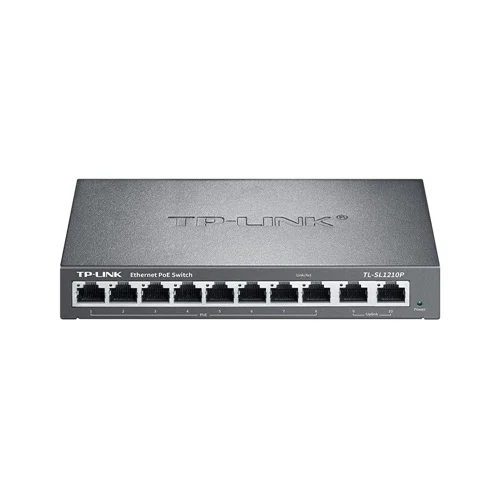
Problem SolvedRunning separate power cables to remote camera locations is costly. This switch delivers both data and up to 30W of power over a single Ethernet cable up to 100 meters, while dedicated dual Gigabit uplinks and an SFP port connect easily to an NVR and core network simultaneously.
PoE+IP CamerasVideo Surveillance ModeSFP UplinkIEEE 802.3at
2. Campus Wireless Access Point (WAP) Isolation
Connecting and powering multiple Wi-Fi Access Points across small offices or campus dormitories. Using the VLAN Isolation mode, the downlink access ports are isolated from each other to prevent security breaches.
Problem SolvedGuest or employee devices connected to different APs can compromise local network security or generate excessive broadcast traffic. The VLAN Isolation mode blocks peer-to-peer communication between the 8 PoE ports, containing network threats and optimizing bandwidth.
VLAN IsolationWireless Access PointBroadcast Storm SuppressionPeer-to-Peer Isolation
3. Industrial VoIP Networks
Powering IP telecommunication systems in office and factory floor environments. The built-in priority mechanism manages PoE loads intelligently.
Problem SolvedSudden power overloads on typical switches can cause critical IP phones to reboot, interrupting communication. The switch's intelligent PoE priority mechanism automatically shuts off power to lower-priority ports if the 56W budget is exceeded, maintaining uninterrupted service on critical lines.
PoE Priority MechanismVoIPIP PhonesIEEE 802.3afUnmanaged Switch