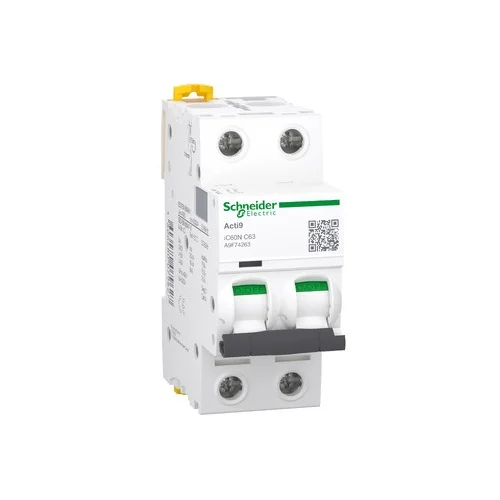
1. Industrial Motor Control Center (MCC) Protection
Utilized inside industrial motor control cabinets to safeguard low-voltage inductive loads, such as small-to-medium three-phase motors and process pumps. The C-curve tripping characteristic is specifically engineered to allow normal motor inrush currents during startup phases without initiating nuisance trips.
Problem SolvedMitigates the risk of catastrophic winding and control panel damage caused by heavy thermal overloads and short circuits while preventing disruptive, false shutdowns during high-current starting cycles.
C-curve tripping63A rated currentMotor control protectionIEC/EN 60947-2VisiTrip indicator
2. Substation DC Auxiliary Power Supply Safeguarding
Deployed in electrical substations or critical backup battery rooms to protect the 110V/125V DC auxiliary power systems. These DC networks supply uninterrupted power to protection relays, communication links, and remote control systems.
Problem SolvedProvides reliable, dedicated DC overcurrent protection up to 125V DC (with 10 kA breaking capacity), ensuring that auxiliary power distribution remains fully functional and isolated during heavy fault events without system-wide blackouts.
125V DC breakingAuxiliary power systemDC network protectionVisiSafe technologySubstation reliability
3. Commercial HVAC and Chiller Distribution Branch Protection
Serves as branch circuit protection in heavy commercial climate control panels, feeding high-capacity single-phase or two-phase loads, including air handling units, compressor heaters, and condenser fan arrays operating at 220-240V AC.
Problem SolvedSecures branch networks against severe overcurrent faults. The high 20 kA breaking capacity at 220-240V AC guarantees high safety margins in commercial installations, while the VisiTrip indicator allows maintenance personnel to immediately identify the faulted HVAC circuit.
220...240 V AC20 kA breaking capacityCommercial HVACOvercurrent protectionDIN rail installation