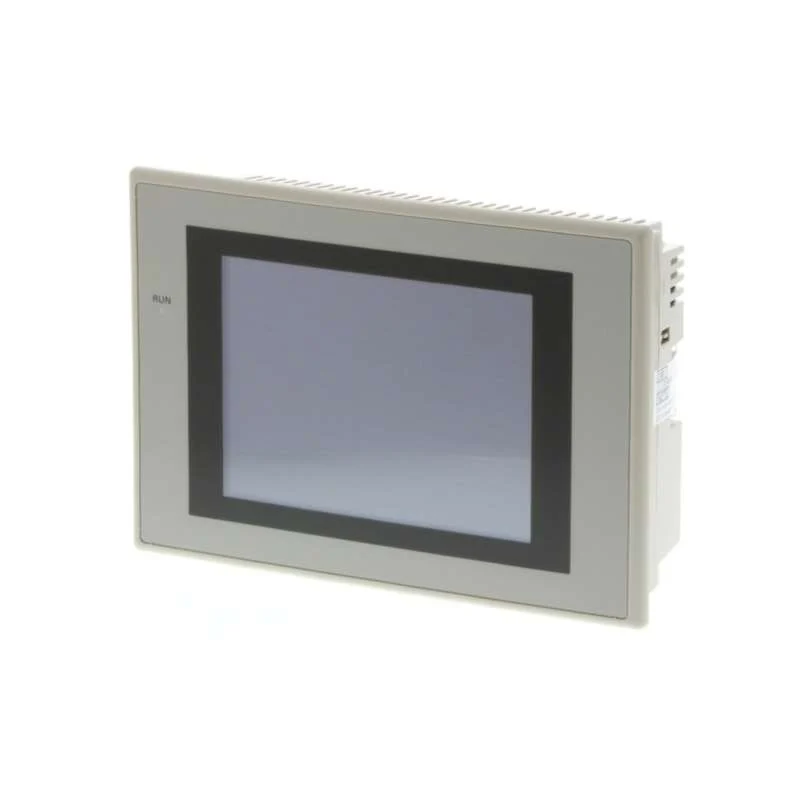
1. Standalone Machine Control Interface
Used as the primary operator interface on a small to medium-sized standalone machine, such as a wrapping machine, labeling system, or a parts assembly station. Operators can use the 5.7" screen to start/stop cycles, adjust machine parameters (e.g., speed, temperature), view production counts, and acknowledge alarms.
Problem SolvedProvides a centralized, intuitive graphical interface for machine operation, replacing complex arrays of physical buttons, switches, and pilot lights. The 24 VDC power requirement is standard for industrial control panels, simplifying system integration.
HMIOperator Interface24 VDCMachine ControlSTN Display
2. Process Monitoring in Small-Scale Batching Systems
Installed on a control panel for a small batching or mixing system in the food and beverage or chemical industries. The HMI displays real-time data like tank levels, temperatures, and valve statuses, allowing operators to monitor the process and manually intervene if necessary.
Problem SolvedOffers clear visualization of a process without the need for a full SCADA system. Its non-Ethernet design is suitable for localized control where direct serial communication (RS-232C/RS-422A) to a local PLC is sufficient and network connectivity is not required.
Process MonitoringProgrammable TerminalBatch ControlData VisualizationSerial Communication
3. Conveyor Line Status and Fault Display
Mounted at a key point along a conveyor line to provide operators and maintenance personnel with at-a-glance status information. It can display which sections of the conveyor are running, show sensor status, and provide specific locations and descriptions of faults or jams.
Problem SolvedReduces downtime by providing immediate, localized fault information. The 320x240 resolution is sufficient for displaying graphical layouts of the conveyor system and highlighting problem areas, allowing for quicker diagnosis and resolution than interpreting PLC code or indicator lights.
Fault DisplayConveyor SystemAlarm ManagementIndustrial AutomationHMI