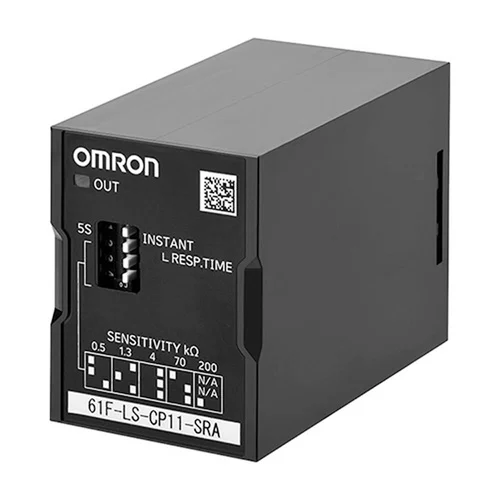
1. Automated Chemical Dosing and Mixing Systems
Monitors and controls the level of aggressive acid or alkali chemicals in processing tanks. The adjustable sensitivity allows it to handle variations in specific resistance inherent to distinct chemical batches, while the 24 VAC supply ensures safe low-voltage control near volatile substances.
Problem SolvedPrevents dry-running of chemical pumps and overflows in mixing vats, adapting to different liquid conductivity thresholds without relying on mechanical floats that can degrade rapidly in highly acidic or alkaline environments.
Conductive Level ControlAcid ChemicalsAlkali ChemicalsAdjustable SensitivityFloatless Level Switch
2. Remote Municipal Sewage Lift Stations
Employs the long-distance cable support (up to 4,000 meters) to detect liquid levels in remote wastewater sumps or sewage lift stations. The plug-in base simplifies field maintenance while the built-in relay output directly controls intermediate signaling devices or drainage pump starters.
Problem SolvedAllows centralized level monitoring of highly conductive wastewater at extensive distances where traditional direct-wired mechanical float switches suffer from signal loss, interference, or mechanical failure.
Sequential Operation4000 m Cable LengthSewage WaterSPDT Relay OutputRemote Liquid Monitoring
3. Industrial Desalination and RO Systems
Serves as the primary liquid level controller in saline tanks or reverse osmosis (RO) systems processing salt water and generating distilled water. The system utilizes specific electrodes to maintain distinct high and low thresholds via its 3 electrode inputs.
Problem SolvedOvercomes the sensing challenges of both low specific resistance (salt water) and high specific resistance (distilled water) by allowing process technicians to tune the floatless controller's sensitivity for precise fluid transfers.
Distilled WaterLow Specific ResistanceHigh Specific ResistanceSalt Water3 Electrode Inputs