1. High-Speed Defect Detection for Production Lines
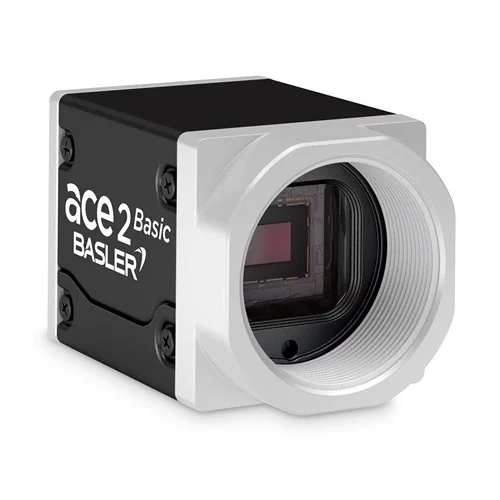
This camera is ideal for inspecting products on high-speed manufacturing lines, such as checking for surface defects, missing components, or incorrect assembly of small parts. Its 160 fps global shutter sensor ensures clear images of rapidly moving objects without motion blur, while the 2.3 MP monochrome resolution provides the necessary detail for precise defect identification. The compact size allows for easy integration into existing machinery.
Problem SolvedPrevents defective products from reaching later stages or customers by enabling real-time, automated inspection at production line speeds, significantly reducing waste and improving product quality.
Machine VisionAutomated Optical Inspection (AOI)Global Shutter160 fps2.3 MPSurface InspectionQuality Control
2. Precision Guidance for Industrial Robotics
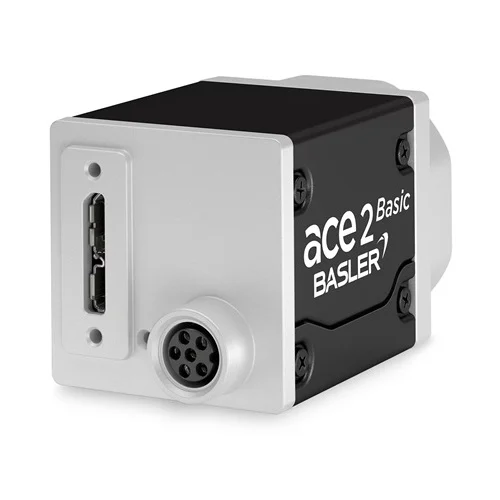
The Basler a2A1920-160umBAS can provide accurate visual feedback for robotic pick-and-place operations or guidance tasks. Its fast frame rate and global shutter enable robots to quickly identify and precisely locate objects in motion, facilitating rapid and accurate manipulation. The monochrome sensor can offer better contrast for object recognition, especially with varied lighting conditions. The compact form factor is beneficial for mounting directly onto robot arms.
Problem SolvedImproves the speed and accuracy of robotic tasks, such as sorting, assembly, and material handling, by providing reliable and timely visual data for precise object detection and positioning.
RoboticsVision-Guided RoboticsPick-and-PlaceObject RecognitionGlobal ShutterUSB3 VisionIndustrial Automation
3. Automated Image Acquisition for Microscopy and Laboratory Automation
With its high resolution, frame rate, and monochrome sensor, this camera is suitable for automating image acquisition in microscopy or other laboratory settings. It can capture fast biological processes or swiftly scan microscopic samples for analysis. The global shutter minimizes distortion for moving samples, and the high sensitivity of a monochrome sensor is advantageous for low-light imaging or fluorescence applications when paired with appropriate lighting.
Problem SolvedAutomates and accelerates the image acquisition process in scientific research and diagnostic applications, allowing for faster analysis of dynamic events or high-throughput screening of samples.
MicroscopyLaboratory AutomationBio-imagingHigh-Speed ImagingMonochrome SensorGlobal ShutterScientific Research