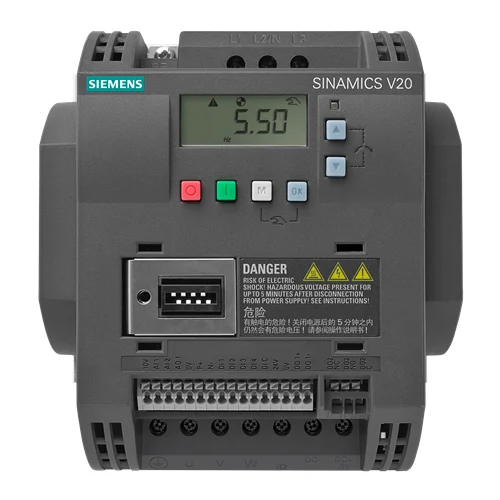
1. Conveyor Belt Speed Control in Manufacturing
This Variable Frequency Drive can precisely control the speed of a 2.2 kW 3-phase AC motor driving a conveyor belt, optimizing material flow and production rates in manufacturing facilities. The IP20 rating is suitable for installation within a control cabinet, protecting it from dust and accidental contact. The integrated braking unit allows for controlled deceleration and stopping.
Problem SolvedPrevents product damage and inefficient material handling caused by constant speed operation or manual speed adjustments, leading to smoother production and energy savings. Precise speed control enhances operational flexibility.
Variable Speed DriveConveyor SystemsMaterial Handling3-Phase AC Motor ControlEnergy EfficiencyModbus RTUControlled Deceleration
2. Pump Control for HVAC or Water Circulation Systems
Ideal for controlling the flow rate in HVAC systems or industrial water circulation by adjusting the speed of a 2.2 kW pump motor. The 380-480V input voltage is standard for industrial three-phase power, and variable speed operation significantly saves energy. The IP20 rating ensures safe housing in an electrical room, and the digital/analog I/O allows for integrated system control.
Problem SolvedEliminates the need for mechanical throttling valves, which reduces energy consumption, minimizes wear on pumps, and maintains desired pressure or flow more accurately, leading to lower maintenance costs and optimized system performance.
Pump ControlHVAC SystemsFlow RegulationEnergy Optimization3-Phase Induction MotorIndustrial AutomationAnalog Output Control
3. Fan Speed Regulation in Industrial Ventilation
Suitable for regulating the speed of a 2.2 kW industrial fan in ventilation systems, allowing for demand-controlled airflow in factories, warehouses, or commercial buildings. The compact size (90x166x145.5 mm) facilitates seamless integration into existing control panels, and Modbus RTU enables integration into building management systems.
Problem SolvedProvides precise control over air quality and temperature, reducing energy waste associated with operating fans at full speed constantly, extending the lifespan of fan motors, and lowering operational noise. It solves the problem of inefficient fixed-speed ventilation.
Industrial VentilationFan ControlAirflow OptimizationDemand ControlMotor ProtectionControl Cabinet IntegrationEnergy Savings