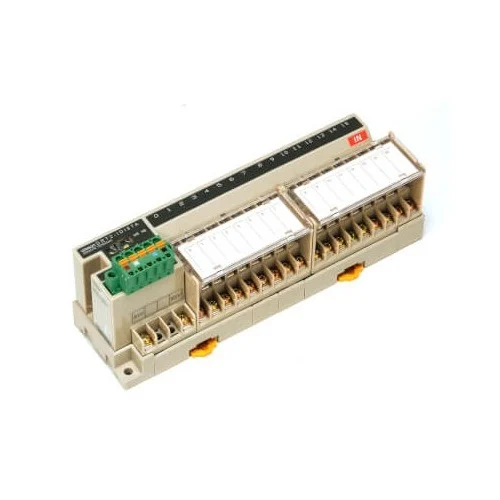
1. Automotive Assembly Line Monitoring
In an automotive assembly workstation, this module can be used to monitor a high density of sensors that confirm the presence and correct positioning of components like chassis parts, doors, and engine blocks before the next automated process begins.
Problem SolvedThe module's 16 PNP input points allow for the connection of numerous proximity or photoelectric sensors in a compact area. Its DeviceNet communication ensures reliable, real-time status updates are sent to the master PLC, which is critical for maintaining production speed and quality. The IP20 rating makes it suitable for installation within the main control cabinets away from direct contaminants.
16 PNP InputsDeviceNetPLC IntegrationProximity SensorsAssembly Automation
2. High-Speed Packaging and Sorting
This I/O terminal is ideal for the packaging industry on machines that sort, fill, and seal products at high speeds. It can aggregate signals from sensors that detect product presence, guide rail positions, and packaging material alignment.
Problem SolvedThe fast 1.5 ms ON/OFF delay time ensures that the control system receives sensor feedback with minimal latency, allowing for precise control of actuators like diverter gates and labeling applicators. The unit's high vibration resistance (50 m/s²) and secure M3 screw terminals ensure operational reliability in mechanically intensive environments common to packaging machinery.
1.5ms Response TimeVibration ResistanceConveyor ControlPackaging AutomationSensor Aggregation
3. Distributed I/O for Warehouse Conveyor Systems
Used in distributed control panels along a large-scale warehouse conveyor system to monitor package flow and positioning across different zones. The module collects data from an array of sensors tracking totes and boxes.
Problem SolvedThe wide ambient operating temperature range (-10°C to 55°C) allows for reliable operation in warehouse environments that may not be climate-controlled. Its standard DIN rail mounting simplifies installation and maintenance in multiple decentralized panels. By concentrating 16 sensor inputs into a single DeviceNet node, it significantly reduces complex wiring runs back to a central controller.
DIN Rail MountDistributed I/OMaterial HandlingDeviceNet NodeWarehouse Automation