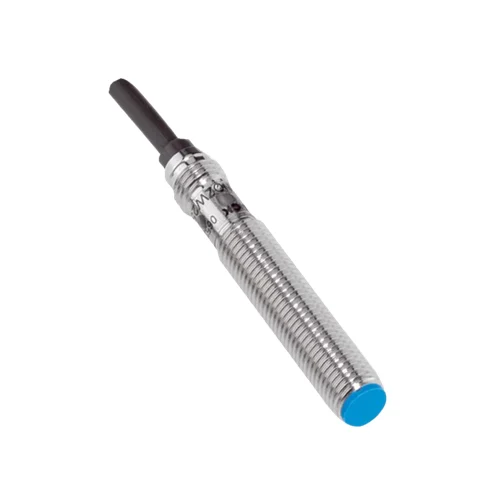
1. Confirming a seated metal clamp target
An assembly fixture can place a metal clamp target beside the flush M8 sensing face and read the normally-open PNP output after the clamp settles. The 1.62 mm assured range provides the stated range reference. Commissioning accounts for target size, actual gap and material reduction factors so the expected seated position creates a distinct switching condition.
Problem Solved
A metal-target position condition helps external sequencing logic distinguish a seated clamp from its open position, using the installed gap and target material as the sensing basis.
Clamp position
Flush M8
PNP normally open
2. Counting separated metal pieces on a feed track
A feeder can guide separated metal pieces past the sensing face and send PNP transitions to an external counter. The 4,000 Hz switching specification establishes the sensor timing basis for the arrangement. Setup verifies target coverage, material reduction, travel speed and separation so each piece enters and leaves the verified sensing zone distinctly.
Problem Solved
Distinct inductive transitions give external counting logic a passage event for each suitably presented metal piece, helping track throughput at a fixed feed location.
Metal part count
4,000 Hz
Feed passage
3. Detecting a missing return event in a machine sequence
A cyclic mechanism can carry a metal reference flag that passes the sensor when it returns to its expected position. External control compares the PNP event with a sequence timer and identifies a missing or late return. The flush threaded installation and 3.1 m cable support placement beside the mechanism, with gap and target material established during setup.
Problem Solved
A timed metal-reference event helps external sequence monitoring identify a missing return, allowing it to distinguish normal cycle completion from a mechanism that has stalled or arrived late.
Return-event timing
Machine sequence
Metal reference flag