Skip to content

Contact Us:
sales@inosaki.com

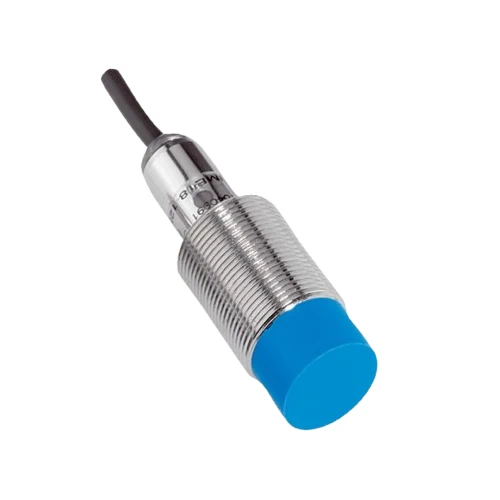
SICK 1040983 IME18-12NPSZW2K PNP Inductive Sensor

SICK 1040983 IME18-12NPSZW2K PNP Inductive Sensor

USD 30.16

IME18-12NPSZW2K offers 12 mm nominal and 9.72 mm assured sensing, non-flush M18 mounting, PNP normally-open output and a 2 m three-wire PVC cable.

SKU: SICK-1040983 Category:
SICK IME

SICK IME18-12NPSZW2K PNP Non-flush Inductive Proximity Sensor

BrandSICK
Model IdentifierIME18-12NPSZW2K
Official Part Number1040983

Technical Overview

The SICK IME18-12NPSZW2K is a short-body M18 × 1 inductive proximity sensor for non-flush installation. Nominal sensing range is 12 mm and assured sensing range is 9.72 mm, with material-dependent reduction factors for nonferrous and stainless targets. Its PNP normally-open output switches at up to 1,000 Hz and supports continuous current up to 200 mA. The 10–30 V DC three-wire device connects through a 2 m three-wire PVC cable with 0.25 mm² conductors and a 3.9 mm diameter. A nickel-plated brass housing and PA66 sensing face provide IP67 protection. Two nickel-plated brass mounting nuts are supplied. Operating temperature spans −25 to +75 °C, and maximum tightening torque is 40 Nm.

Non-flush short-body M18 inductive sensor with 12 mm nominal range, 9.72 mm assured range, PNP normally-open output and a 2 m three-wire PVC cable.

Key Features

  • Inductive proximity sensing; short-body M18 × 1 housing; non-flush installation
  • 12 mm nominal sensing range; 9.72 mm assured sensing range
  • PNP normally-open output; DC three-wire configuration
  • 1,000 Hz switching frequency; continuous output current ≤200 mA
  • 10–30 V DC; no-load current ≤10 mA; voltage drop ≤2 V at maximum load
  • ≤100 ms time delay before availability; short-circuit and power-up pulse protection
  • 2 m three-wire PVC cable; 0.25 mm² conductors; 3.9 mm diameter
  • Nickel-plated brass housing; PA66 sensing face; IP67
  • Two nickel-plated brass mounting nuts supplied; 24 mm across flats
  • −25 to +75 °C operation; tightening torque ≤40 Nm

Detect a metal target at a non-flush sensing face and supply a PNP normally-open signal to external counting, fixture or position-monitoring logic.

Technical Specification Matrix

ParameterValue
Functional principleInductive proximity sensor
Housing designMetric short-body
Mounting threadM18 × 1
InstallationNon-flush
Nominal sensing range Sn12 mm
Assured sensing range Sa9.72 mm
Switching outputPNP
Output functionNormally open (NO)
Electrical wiringDC three-wire
Switching frequency1,000 Hz
Power supply10–30 V DC
Ripple≤10%
Voltage drop≤2 V at maximum output current
Time delay before availability≤100 ms
Hysteresis5–15%
Reproducibility≤2% of real sensing range Sr at constant supply voltage and ambient temperature
Temperature drift±10% of real sensing range Sr
Continuous output current≤200 mA
No-load current≤10 mA
Short-circuit protectionProvided
Power-up pulse protectionProvided
Connection2 m three-wire PVC cable
Conductor cross-section0.25 mm²
Cable diameter3.9 mm
Wire assignmentsCD-001: BN=L+; BK=normally-open output; BU=M
Housing materialNickel-plated brass
Sensing face materialPA66 plastic
Housing length48 mm
Thread length23 mm
Tightening torque≤40 Nm
IP ratingIP67 according to EN 60529
Items suppliedTwo nickel-plated brass mounting nuts; 24 mm across flats
IndicatorDisplay LED
Operating temperature−25 to +75 °C
Shock resistance30 g, 11 ms
Vibration resistance10–55 Hz, 1 mm
EMCAccording to EN 60947-5-2
UL fileNRKH.E181493
MTTFD1,735 years
DCavg0%
Material reduction factorsReference values, may vary: St37 steel 1; stainless steel V2A/304 approximately 0.8; aluminum approximately 0.45; copper approximately 0.4; brass approximately 0.4
Installation clearancesA=18; B=36; C=18; D=36; E=24; F=96 mm; use the manufacturer non-flush installation diagram

Industrial Applications

1. Confirming a metal clamp at its seated position

A fixture can present a metal clamp target to the non-flush sensing face at a controlled final gap. External sequencing logic samples the PNP normally-open output after the clamp settles. Commissioning checks target material, thickness and placement tolerance against the nominal and assured ranges, accounting for material reduction factors before accepting the seated condition.

Problem Solved

A clamp-position reference helps external sequencing logic distinguish a seated metal target from an open location, using a non-flush inductive sensing point checked for the actual target material.

Clamp presence Non-flush installation PNP output

2. Counting separated metal flags on a moving mechanism

A moving mechanism can carry separated metal flags past the inductive sensing face and feed PNP transitions to external counting electronics. Setup checks flag material, coverage, passing gap and the separation between flags. Motion timing is verified against the 1,000 Hz switching frequency, and the connected input respects the continuous-current and voltage-drop limits.

Problem Solved

A metal-flag passage reference helps external counting electronics register repeated mechanical events, using contactless inductive switching checked for the actual target spacing, material and travel speed.

Metal-flag counting Inductive switching Timing checks

3. Referencing a carriage near a travel position

A carriage can bring a metal reference tab toward the non-flush-mounted sensor near a defined travel position. External motion logic reads the PNP normally-open state as a position reference. Installation checks tab material, approach geometry and allowable gap, while commissioning accounts for reproducibility, hysteresis and temperature drift so the reference remains meaningful over the expected operating conditions.

Problem Solved

A carriage-reference signal helps external motion logic identify a checked mechanical position, using inductive target detection and installation margins established for the actual approach geometry and temperature range.

Carriage reference Metal target Installation margins

Select your currency